Representing Diversity with Purpose: How the Disabled Young Women and Men AI EPS Collection Is Reshaping Visual Storytelling
In recent years, the demand for inclusive and representative visual content has moved from a niche concern to a central pillar of effective communication. Brands, creators, and organizations are realizing that the images they use must reflect the full spectrum of human experience. Among the most impactful developments in this space is the emergence of specialized illustration sets that center on underrepresented groups—specifically, Disabled Young Women and Men. This article explores what this collection represents, why it matters now, and how it fits into larger shifts across design, marketing, technology, and culture.
Understanding the Disabled Young Women and Men Illustration Set
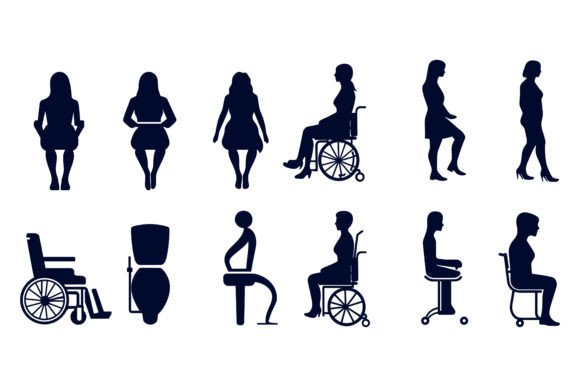
At its core, the Disabled Young Women and Men collection is a curated set of vector illustrations designed to portray young individuals with disabilities in authentic, dignified, and empowered ways. Unlike generic stock imagery that often tokenizes or stereotypes disability, this collection focuses on real-life moments, professional settings, social interactions, and everyday activities. The illustrations show young people using wheelchairs, crutches, canes, prosthetic limbs, hearing aids, and other assistive devices—not as symbols of limitation, but as natural parts of their lives.
Each illustration is crafted with attention to posture, expression, context, and environment. The result is a visual library that allows designers, marketers, and content creators to tell stories that include disability without making it the sole focus. This approach aligns with the growing understanding that disability is not a niche identity but a common human experience. According to the World Health Organization, over one billion people live with some form of disability, making this one of the largest and most diverse communities globally.
The collection is delivered in AI, EPS, and JPG formats, ensuring compatibility across both Mac and Windows environments. Every file is organized with a neat layer structure, making modifications straightforward. Whether you need to adjust colors, resize elements, or combine illustrations, the design supports easy editing. This technical thoughtfulness matters because it reduces friction for busy professionals who need to adapt assets quickly.
Broader Industry and Market Trends Driving Attention to This Collection
The rise of Disabled Young Women and Men illustration sets is not happening in isolation. Several intersecting trends are converging to make this type of content essential for forward-looking brands and creators.
Inclusive Design as a Business Imperative
Inclusive design is no longer a buzzword; it is a measurable business priority. Research consistently shows that consumers expect brands to represent diversity authentically. A 2023 study by Adobe found that 61% of consumers are more likely to trust brands that feature diverse representations in their marketing. However, the same study revealed that only 34% of brands feel they are adequately meeting this expectation. This gap represents a significant opportunity for early adopters of inclusive visual assets.
The Disabled Young Women and Men collection directly addresses this gap. By providing high-quality, context-rich illustrations, it enables brands to move beyond token gestures and build visual narratives that genuinely include people with disabilities. This is not about checking a box; it is about creating content that resonates with a broader audience and fosters long-term loyalty.
The Shift Toward Authentic Representation
Audiences have become remarkably adept at detecting inauthentic representation. Stock imagery that feels staged or clichéd can actually harm brand perception. In contrast, illustrations that show nuanced, everyday moments—such as a young woman in a wheelchair collaborating with colleagues or a man with a prosthetic arm enjoying a coffee break—build emotional resonance. The Disabled Young Women and Men set emphasizes consistency in style and detail, which helps maintain a cohesive brand identity while still telling diverse stories.
This trend is particularly strong among younger demographics. Gen Z and Millennials, who now represent a substantial portion of consumer power, actively seek out brands that reflect their values. They are more likely to engage with content that features people with disabilities in normal, non-stereotypical settings. The collection meets this expectation head-on by prioritizing dignity, agency, and everyday realism over pathos or inspiration narratives.
Technology and Workflow Evolution
The design tools and workflows used by creative professionals have evolved dramatically. Vector-based illustration sets like this one are particularly valuable because they are resolution-independent, meaning they look crisp at any size—from app icons to billboards. The inclusion of AI and EPS formats ensures seamless integration with industry-standard software such as Adobe Illustrator, Affinity Designer, and CorelDRAW. For professionals who work across print and digital platforms, this flexibility is invaluable.
Moreover, the organized file and layer structure means that even large teams can collaborate efficiently. A designer in one office can easily hand off an editable file to a colleague in another location without losing time on file cleanup or layer identification. This operational efficiency is a practical benefit that directly impacts project timelines and cost.
Why People Are Paying Attention to This Collection Now
Several factors are converging to make Disabled Young Women and Men illustration sets a topic of growing interest among professionals, creators, and entrepreneurs.
Changing Expectations Around Accessibility
Accessibility is increasingly understood as a design criterion, not an afterthought. This includes not only technical accessibility—such as screen reader compatibility—but also visual representation. When people with disabilities see themselves reflected in marketing materials, product interfaces, and educational content, it signals that they are valued as customers and community members. The Hello Welcome to our Special AI EPS Collections phrase captures a spirit of invitation and belonging, which is precisely the tone that modern brands need to strike.
Organizations that lag behind in this area risk alienating a large and growing demographic. Conversely, those that proactively integrate inclusive imagery into their branding can differentiate themselves in crowded markets. The collection offers a ready-made solution for doing so, without requiring brands to commission custom illustrations from scratch—a process that can be time-consuming and expensive.
Practical Value for Freelancers and Small Teams
Freelancers and small business owners often operate with limited budgets and tight deadlines. Commissioning original illustrations of people with disabilities can be prohibitively costly, and finding high-quality stock options is often difficult. This collection fills a specific gap by offering professionally designed, editable assets at a fraction of the cost of custom work. The ability to change colors, resize, and modify icons easily means that a single set can serve multiple projects—from website headers to social media graphics to presentation slides.
For a freelancer building a portfolio or a startup launching a brand, having access to such a set can accelerate their ability to present a polished, inclusive image from day one. This practical, cost-effective value is a major reason why the collection is gaining traction among independent professionals.
Alignment With Content Marketing and Brand Storytelling
Content marketing strategies increasingly rely on visual storytelling to build emotional connections. A blog post about workplace inclusion, for example, becomes far more compelling when accompanied by an illustration that shows diverse team members collaborating. The Disabled Young Women and Men set provides the visual building blocks for these narratives, allowing marketers to create cohesive stories across multiple touchpoints.
Moreover, the consistency in illustration style ensures that as brands scale their content, the visual identity remains cohesive. This is particularly important for organizations that produce a high volume of content, such as e-learning platforms, non-profits, and media companies. The collection's attention to detail—such as consistent line weights, color palettes, and character proportions—makes it easy to integrate into existing design systems.
Practical Examples and Observations Across Use Cases
To understand how the Disabled Young Women and Men collection functions in real-world scenarios, consider the following examples:
- E-learning platforms: An online course provider uses the illustrations to depict students with disabilities participating in group activities, studying, and presenting projects. This not only normalizes disability in educational settings but also helps all students feel represented.
- Non-profit fundraising campaigns: An advocacy organization uses the illustrations in their annual report and website to show the communities they serve. The images convey dignity and agency, avoiding the pity-driven imagery that often plagues charity communications.
- Corporate HR materials: A company revamps its diversity and inclusion training modules using the illustrations to depict workplace scenarios involving colleagues with disabilities. The consistent style helps maintain a professional tone while making the content more relatable.
- Mobile app design: A startup building a health and wellness app uses the illustrations in onboarding screens and feature highlights. The ability to edit colors and sizes allows them to adapt the assets to their specific UI without losing visual harmony.
In each case, the value of the collection extends beyond the visuals themselves. It enables faster production, reduces the need for repeated custom commissions, and ensures that disability representation is woven into the fabric of the content rather than added as an afterthought.
What Makes This AI EPS Illustration Set Special for You
The question What makes these Ai EPS illustration set special for You is not just a marketing prompt; it points to a genuine differentiator in the marketplace. Many illustration collections exist, but few combine technical rigor with a focused, respectful portrayal of a historically underrepresented group. The features that stand out include:
- Perfection in details and consistency: Every illustration in the set follows a unified visual language. Facial expressions, body language, and environmental elements are all rendered with care, ensuring that the set feels cohesive when used together.
- Suitability for print, web, symbols, apps, and infographics: Because the files are vector-based, they scale without quality loss. This versatility means one purchase can serve multiple purposes across different media.
- Ease of editing: Layers are named clearly and grouped logically. Changing a color, swapping an element, or adjusting a pose can be done in minutes, even by designers who are not deeply familiar with the original file structure.
- Cross-platform compatibility: Designed for both Mac and Windows users, the files open correctly in all major vector editing software. This eliminates the compatibility headaches that sometimes arise with specialized file formats.
These qualities matter because they directly affect how quickly and effectively professionals can deploy the illustrations. In a fast-paced creative environment, the difference between a collection that is merely good and one that is truly useful often comes down to these structural and technical details.
Connecting to Larger Developments in Visual Culture
The emergence of illustration sets like Disabled Young Women and Men is part of a larger shift toward visual equity in media and design. As artificial intelligence tools become more capable of generating imagery, there is a growing recognition that human-curated, ethically produced content remains essential. AI-generated images can perpetuate biases present in their training data, whereas a thoughtfully designed collection can intentionally counteract those biases.
This collection exemplifies a human-centered approach to AI-assisted design. The illustrations are crafted with an understanding of lived experience, not just aesthetic trends. By making such assets accessible, the creators are helping to democratize high-quality inclusive design. This is particularly important as more organizations adopt data-driven marketing and personalization strategies, where visual content must be both scalable and meaningful.
Furthermore, the conversation around disability representation is evolving. The medical model of disability—which frames disability as a problem to be fixed—is giving way to the social model, which recognizes that societal barriers disable people, not their impairments. Visuals that show people with disabilities in natural, empowered roles support this paradigm shift. They help normalize disability as a variation of human experience rather than an anomaly.
Conclusion: A Practical Investment in Inclusive Storytelling
The Disabled Young Women and Men AI EPS illustration collection is more than a set of graphics; it is a tool for building a more inclusive visual landscape. For professionals, creators, entrepreneurs, marketers, and freelancers, it offers a practical way to align their work with the values of representation, dignity, and authenticity that audiences increasingly demand.
By combining technical quality with a focused subject matter, the collection meets a real and growing need. It saves time, reduces costs, and—most importantly—helps tell stories that include everyone. Whether you are designing a website, creating a campaign, building an app, or preparing a presentation, this set provides the building blocks you need to represent Disabled Young Women and Men with the respect and nuance they deserve.
So what are you waiting for? Buy now and start using this awesome illustration set to elevate your visual storytelling and connect with audiences in a more meaningful way.