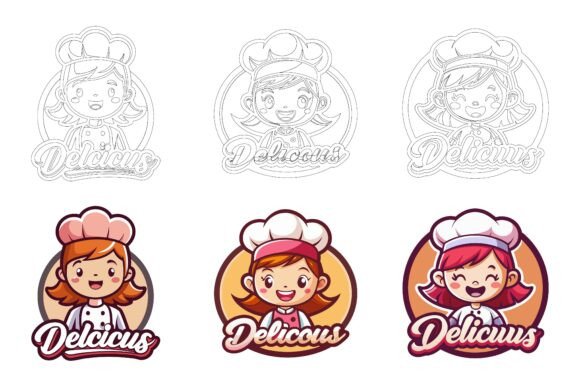
Little Kid Chefs: Bringing Fun and Creativity to Your Design Projects
You know that feeling when a project needs a spark of warmth and personality, but you just can’t find the right visuals? Maybe you’re designing a children’s cookbook, putting together a flyer for a cooking class, or creating content for a family-friendly food blog. That’s where the Little Kid Chefs illustration set steps in. It’s more than just a collection of cute images; it’s a playful, versatile resource that helps you communicate ideas about food, learning, and fun without starting from scratch. Whether you’re a seasoned designer or a parent trying to make a simple poster, these AI EPS files are built to make your life easier.
What Exactly Are Little Kid Chefs?
At its core, Little Kid Chefs is a specially curated AI EPS illustration set featuring adorable chef characters—kids with aprons, hats, and cooking tools. The collection includes three variations, giving you different poses and scenarios to work with. Each file comes in AI, EPS, and JPG formats, so you can open them on both Mac and Windows machines without a headache. The layers are neatly organized, meaning you can dive in, tweak colors, swap ingredients, or resize elements in seconds. It’s designed for consistency, so whether you use one illustration or all three, the style stays cohesive.
But honestly, the real magic isn’t in the file specs. It’s in how these little chefs can transform a plain project into something that feels inviting and relatable.
Real-World Scenarios: Where Little Kid Chefs Shine
I’ve seen designers use this set for everything from a bakery’s “Kids Bake Free” event poster to a nutritionist’s handout on healthy snacks. One example that stuck with me: a small cooking school needed a series of recipe cards for their weekend workshops. They wanted something that felt playful but professional. With the Little Kid Chefs illustrations, they created a set of cards where each chef demonstrated a step—mixing, pouring, decorating. The consistency in the art style made the whole series look like it came from a single brand, and parents loved the friendly vibe.
Think about a children’s hospital looking to design a menu for young patients. A sterile list of meals can feel off-putting. But add a little chef stirring a pot or holding a fruit, and suddenly the menu becomes an invitation. The illustrations help reduce anxiety and make the space feel more child-friendly. That’s the kind of practical impact this set can have.
Educators and Content Creators
If you’re a teacher creating worksheets or a homeschool parent building a cooking unit, the Little Kid Chefs give you a visual anchor. Instead of hunting for clipart that doesn’t match, you have three variations ready to drop into your materials. For example, you can use one chef for a recipe sequencing activity, another for a kitchen safety poster, and the third for a “design your own apron” coloring page. The JPG versions work directly in Word or PowerPoint, while the layered files let you customize expressions or items if you want to go further.
One educator I spoke to used the illustrations to create a “Chef of the Week” bulletin board. She printed the chefs on cardstock, added the student’s name, and displayed them alongside photos of their cooking projects. The kids felt recognized, and the visual consistency made the board look polished. It’s a small touch, but it built community in her classroom.
Small Business Owners and Marketers
Restaurants, bakeries, and meal kit services often struggle to find kid-friendly imagery that doesn’t look cartoonish or generic. The Little Kid Chefs strike a balance. For a bakery’s social media post about a kids’ cookie decorating class, one variation of the chef holding a whisk became the star of the flyer. The owner edited the color of the apron to match their brand’s teal, resized it for Instagram, and had a post ready in minutes. The editable nature of the AI file meant she didn’t need to hire a designer for a simple tweak.
Even for infographics—say, a breakdown of “5 Kitchen Tasks Kids Can Do”—the illustrations add a human element. Pair them with simple icons for whisk, peel, and stir, and you’ve got a visually engaging resource that parents will actually read.
How Different Users Benefit in Different Ways
Not everyone approaches these files the same way. A graphic designer might appreciate the perfection in details and consistency—the way lines match, the proportions stay uniform, and the colors feel fresh. They can use the EPS files in Illustrator and combine them with other assets without a style clash.
A busy parent, on the other hand, might value the easy editability. Maybe you want to change the chef’s hat to a different color for a birthday party invitation. Open the file, click the hat layer, pick a new hue, and you’re done. No complex tutorials needed. The fact that it’s designed for both Mac and Windows removes another barrier—you can work on whatever computer you already own.
For a marketing intern at a family-focused brand, the organized layer structure is a lifesaver. You can rebuild entire scenes by copying elements from one variation to another, or resize the chefs for web, app icons, and even printed posters. The JPG export is ready for quick uploads, while the AI file holds all the flexibility for future projects.
Practical Considerations Before You Dive In
Of course, no product is a one-size-fits-all solution, and it’s good to be aware of a few things before you click “buy.” First, the Little Kid Chefs set centers entirely on, well, kid chefs. If your project needs a broader range of characters (adults, animals, or more diverse kitchen scenes), you might need to supplement with other resources. The three variations are charming but limited—enough for most small projects, but not a whole cast of characters.
Second, while the files are easy to edit, you do need vector-compatible software (like Adobe Illustrator or a free alternative like Inkscape) to take full advantage of the AI and EPS layers. If you’re only comfortable with JPG, you’ll still have high-quality images ready to use, but you won’t be able to change individual colors or move elements around. That’s a minor trade-off for the simplicity.
Another thought: because the set emphasizes consistency across the three variations, the style might feel a bit uniform if you’re planning a large multi-page document. That consistent look is actually a strength for branding, but if you need variety in art styles, you might want to combine with other sets. For most users I’ve talked to, though, the uniformity is exactly what they needed—it makes the project look cohesive without extra effort.
Strengths That Make a Difference
The biggest strength of the Little Kid Chefs set is how quickly it takes you from idea to finished piece. You don’t have to sketch, you don’t have to wait for custom illustrations, and you don’t have to stress about resolution. The files are print-ready and web-optimized at the same time. I’ve seen people create bookmarks for a library cooking club, app loading screens, and even stickers for a farmer’s market—all from the same base set.
The editability is another huge win. Need a chef holding a bowl of blueberries instead of a whisk? A few clicks and it’s done. Want to add a speech bubble that says “Let’s cook!”? There’s a clean space in the composition for it. The files are built to be modified, not just placed.
And let’s not overlook the simple joy of having artwork that makes people smile. In a world of generic stock photos, these little chefs feel human. They have personality. That emotional connection matters, especially for audiences like parents, teachers, and kids themselves.
When to Think Twice
If your project demands hyper-realistic food photography or ultra-minimalist icons, these illustrations might feel too whimsical. Also, if you need multiple characters interacting in complex scenes, the three variations may feel limiting. But for focused tasks—flyers, social posts, classroom materials, recipe cards, menus, or infographics—they really deliver. The key is matching the style to the medium. A blog post about “easy meals for toddlers” would look right at home with a little chef image. A high-end restaurant’s wine list? Probably not.
Another consideration: because the set is a digital download, you’ll want to store the files in a place you can find later. I recommend keeping the AI and EPS originals backed up, since you might want to tweak colors for a seasonal event down the road. The JPGs are great for one-offs, but the layered files are where the real flexibility lives.
Making the Decision
If you already have a project in mind—or even just a vague idea of something fun you want to create—the Little Kid Chefs set is a low-risk investment. You get three distinct illustrations, multiple file formats, and a structure that respects your time. No digging through pages of clipart that don’t match. No hours spent adjusting strokes or aligning eyes. Just open, edit, and use.
I’ve seen a parent turn one chef into a birthday invitation, a teacher use another for a “kitchen rules” poster, and a designer combine all three for a cooking app’s onboarding screen. The variety of use cases is wider than you’d expect from a small collection, simply because the artwork is clear, charming, and easy to adapt.
So if you’re ready to add some warmth and creativity to your next project without the wait or the guesswork, this is a solid choice. Little Kid Chefs aren’t just illustrations—they’re a shortcut to making your content feel friendlier and more approachable. What are you waiting for? Buy now and start using this awesome illustration set today.